
Canadian Prime Ministers have apologized for various Canadian misdeeds over our 150 years of existence. We have also taken (partial) steps to remediate. But one Canadian act which has caused immense damage to an unsuspecting people remains unacknowledged and unremediated. It is time. Read more...
All governments make mistakes, including ones that may have appeared sensible and legitimate at a given point in time, but which subsequently appear to be cruel and unjustified. The best governments recognize and admit the mistakes of the past, apologize for them and try to make amends.
Here are some notable apologies made by the Canadian government in the last 30 years for acts or actions of previous Canadian governments.
- 1988: Prime Minister Brian Mulroney apologized for the internment of Japanese Canadians and the government’s theft of their property during World War II.
- 1990: Canada apologized for declaring Italian Canadians “enemy aliens” during World War II.
- 2006: Canada acknowledged and apologized for the discriminatory head tax imposed on Chinese immigrants.
- 2008: Prime Minister Stephen Harper apologized for the residential schools, where native Canadian children attended between the 1880s and 1990s.
- 2018: Prime Minister Trudeau apologized for Canada refusing safe refuge to the desperate Jewish passengers on board the vessel MS St. Louis in 1939.
- 2019: Trudeau apologized for the treatment of Inuit patients with tuberculosis in the mid-20th century.
In some cases, Canada has associated its apology with specific remedial steps. It provided a cash settlement of over 100 million dollars to Japanese Canadians who were wrongly interned, and it also agreed to pay over 2.9 billion dollars to survivors of the terrible residential schools, for example.
STILL UNACKNOWLEDGED
But one act of the Canadian government over 78 years ago which contributed to untold misery on the other side of the world remains unacknowledged. It continues to cause misery to this day.
The act?
Canada actively assisted and facilitated the confiscation of 55% of Palestine (then under British mandate) to turn it over to European Jewish refugees who then forcibly expelled Palestinians from their ancestral homes. We helped pave the way for the disaster that the Palestinians now call the “Nakba”.
Canada did not act alone. But we were actively involved and do bear joint responsibility. To this day, Canada has not recognized the unjustness of its action, nor apologized for it, nor made any attempt to remediate. In fact to this day, Canada continues to defend the idea that European Jews have the right to carve their own state out of historic Palestine.
THE IDEA OF A JEWISH STATE IN PALESTINE
The idea for a Jewish State in Palestine came about as a reaction to the horrible situation of Jews in Europe facing rising antisemitism. Austrian journalist Theodore Hertzl proposed a solution (known as “Zionism”), that European Jews move to Palestine and create a new State of their own in the “Holy Land” where Judaism had arisen over 3000 years earlier.
The Zionist project gained the support of Great Britain. After the defeat of the Ottoman empire, Britain gained control over Palestine and began facilitating massive immigration of European Jews.
Palestinians discovered that they had been hoodwinked by the British. They had joined the British fight against the Ottomans, but instead of the independence Britain had promised them, they now faced a British military regime bent on supporting the creation of a new Jewish State.
The Palestinians objected, of course, first by petitions, then demonstrations, then strikes, then raids on British installations. All of which were rejected or brutally repressed by Britain, supported by Zionist settlers. The resistance, and counter resistance became more violent over time.
As their numbers increased, Jewish colonists began to demand that Britain leave Palestine and turn it over to them. They undertook terrorist acts against the British, including blowing up British military headquarters in Jerusalem in 1946. Britain’s ability to control Palestine was slipping.
In the immediate wake of WWII and the Holocaust, the newly formed United Nations was seized with the “Question of Palestine” and what do do with surviving European Jewish refugees.
CANADA’S ROLE
The UN decided to create a special committee (“The UN Special Committee on Palestine or UNSCOP) to resolve the “Question of Palestine”. Lester B. Pearson (then our undersecretary of external affairs) angled successfully for Canada to get a seat. We were elected along with 10 other “independent’ countries to participate in the work of the committee.
Our nominee to UNSCOP was a Canadian jurist named Ivan Rand. Rand was a brilliant lawyer. National Post writer Tom Blackwell, labelled Rand “The unlikely Canadian who helped create the State of Israel. ” Blackwell also says Rand was a known antisemite.
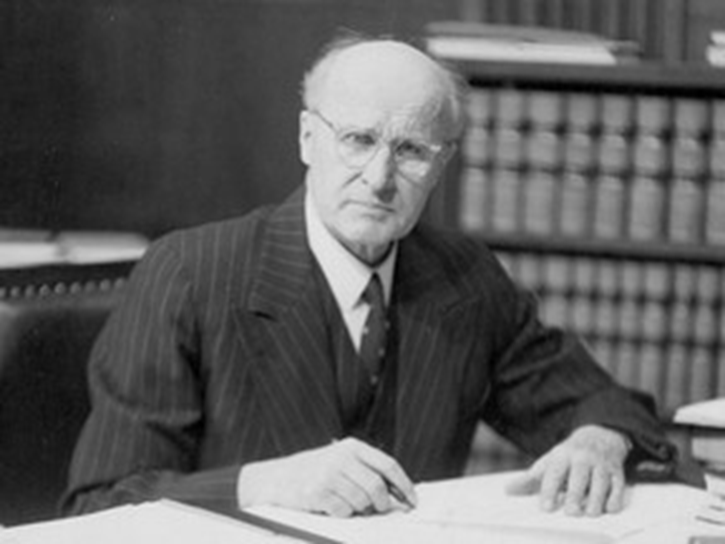
Rand reflected the dominant Canadian antisemitic ideology at the time, savagely exposed in Irving Abella’s book “None is too Many” referring to Canada’s disposition toward Jewish immigrants. But he was happy to redirect them to Palestine instead of coming to Canada.
On Canada’s behalf, Rand played a leading role in the work of the 11 man UNSCOP over the summer of 1947. He did much of the writing and was committed to the idea of an creating a Jewish state. He guided the committee to a “solution” which gave Jews over half of the country, an idea seen as a Zionist victory at the time.
He was not able to convince all UNSCOP members however – there was a minority report which called for a single federal state with equal rights for Jews and Palestinians. Rand ensured it was rejected and it never made it to the floor of the General Assembly for discussion.
Palestinian and Arab opposition to “Partition”
To the Palestinians, the “Partition plan” seemed more like ‘confiscation”. They offered 4 main arguments against it:
- We are not responsible for the Holocaust. You committed the Holocaust, it is up to you to make amends for it.
- This is European colonialism. The UN is giving our land to European Jews, imposing a solution to a European problem on the Palestinian people without their consent.
- Ethnic cleansing. The plan will lead to the displacement of hundreds of thousands of Palestinians, who would be forced to leave their homes and villages
- Unfair distribution of land. The UN plan allocated 55% of Palestine’s land to the Jewish state, despite Jews making up only 33% of the population at the time.
Consequences
On November 29th 1947, the UN General Assembly voted (UNGA 181) in favour of the “partition plan” by a vote of 33 – 18 with 10 abstentions. (The UN membership was much smaller at that time than it is now.) Canada voted in favour of the plan recommended by Ivan Rand.
The Arab countries unanimously opposed the plan. The Palestinians, whose country was being carved up, did not get a vote, as they were still under British control!!
Subsequent events unfolded exactly as the Palestinians had predicted – a solution based on the Holocaust was imposed on a people who had nothing to do with it, massive ethnic cleansing of 3/4 million Palestinians, the European Jewish colonial state took over more than half of Palestine. In fact, they went well beyond that, eventually taking over 78% of Palestine by the end of the next year.
What did Canada do? Canada looked away as Israel confiscated farms, houses, animals and belongings of those expelled and killed anyone trying to return. Almost exactly a year later – on December 11, 1948, the UN General Assembly voted (UNGA resolution 194) affirming the right of Palestinians to return to their lands. Canada voted IN FAVOUR, but Israel never complied and nobody, including Canada took any steps to enforce it.
REPARATIONS?
If Canada apologizes as it should, what kind of remediation could it propose? McGill University professor Rex Brynen calculated that total compensation owing to Palestinians, covering both lost property and pain and suffering would amount to over a hundred billion dollars.
Property lost. The new State of Israel created an “office of absentee property” through which it illegally seized property belonging to Palestinians who had been driven out and then redistributed it to incoming European Jewish refugees. The value of the theft was never calculated. Urban Palestinians lost houses, jewellry, furniture, factories and books. The vast majority of Palestinians were peasants who lost their land, houses, animals, crops, savings etc.
Pain and suffering. This would be almost impossible to assess. Palestinian refugees in Gaza have been in what many call “an outdoor prison” for many years. Canada paid David Milgard $10 million compensation for pain and suffering, lost wages and legal fees, after he unjustly spent 23 years in a Canadian prison for a crime he did not commit. What would be a comparable payout to each of the estimated 5 million Palestinian refugees?
WHAT CAN CANADA DO?
As mentioned above, Canada is not the ONLY responsible party. The UK and many western countries went along with this unfair and unjust decision. However at a minimum, Canada should:
- Apologize for our role in the original confiscation of Palestinian land
- Urge the UN to rescind UNGA resolution 181 and call for a new plan based on democracy and equality for both Jews and Palestinians in historic Palestine
- Call for, and contribute to, a fund to compensate Palestinians for the pain and suffering caused by our actions.
Canada Talks Israel Palestine (CTIP) is the weekly newsletter of Peter Larson, Chair of the Ottawa Forum on Israel/Palestine (OFIP). It aims to promote a serious discussion in Canada about Canada’s response to the complicated and emotional Israel/Palestine issue with a focus on the truth, clear analysis and human rights for all. Readers with different points of view are invited to make comment.
Want to learn more about us? Go to Ottawa Forum on Israel/Palestine.ca
 Canada Talks Israel/Palestine
Thanks for this insightful piece Peter. I’ve heard about Rand’s role in the partition plan but wasn’t aware of the details. I wouldn’t count on an apology but a more forceful Canadian government position on the consequences and longer term fixes would not be misplaced.
Regards,
David
>
Peter, while I agree completely with your main point, there are three points about “Der Judenstaat” that should be made. (1) The author spelled his name “Theodor Herzl” not “Theodore Hertzl” (at least on the book cover). (2) He did not exactly suggest “that European Jews move to Palestine and create a new State of their own”. He suggested two possible locations that could be considered and did not explicitly rule out others. The two were Palestine and Argentina and he devotes some space to comparing the two; he seemed to think that Argentina would be more practical and pleasant but that Palestine was the historical “Heimat” of the Jews.
Most important is (3) What he proposed is not what actually happened. There is no mention of fighting the previous inhabitants and stealing their land. He seemed to think that they would have to buy the land and, if it was to be Palestine, they would need the agreement and support of the Sultan of Turkey. He proposed forming a corporation, and getting donations to it from a variety of sources and using that money to make the purchases, arrange the transportation to the purchased land, build a new society etc. He imagined a “moral person” known as the “Society of Jews” that would form the legal entity that he called “The Jewish company”. The Jewish Company would be the purchaser. (He used English language terminology although the book was written in German.) He went into great detail about who would be allowed to come, what they would do when they arrived. He seemed to have some prejudiced assumptions about Eastern European Jews vs. those from Germany and Austria. I personally found the book very tedious and skipped around rather than read it from cover to cover.
I mention this because I think that today’s version of Zionism is very different from Herzl’s. They share the belief that Jews were not welcome in any existing land and needed to form one of their own. However, he focussed on legal purchase and what happened was a military conquest. I did not find the idea that this was land that they already owned (which is what Israelis profess to believe).
We should not assume that all Zionists are the same. My father (who was in Austria in the 1930s) reported a Zionist vision that was quite different from both Herzl’s and the modern one. I sense that both Herzl and my father’s friends would be horrified by what actually happened.
Thank you for your always helpful additions/corrections. I think that the idea that it would be easy to “encourage’ the Palestinians to move somewhere else was widely held. It was supported by the idea that most of them were nomadic, so would not mind moving along.
Some of the Zionist leaders, like Zabotinski, were quite clear that the Palestinians would resist (he compared to indigenous americans resisting) and that force would be necessary.
The creation of Israel (actually Israel a Jewish state and an Arab state, now called Palestine) in 1947-48 may have been wrongheaded but revisiting that now is counterproductive. The UN decided and has continue to reiterate the two states; and therefore a two stage solution (2SS) is still what the bill on international opinion still endorses (at least at the UN). We cannot reverse the many changes in states formed in the 20th Century (or earlier) without massive counterproductive disruption. What we can do is aim our sights on an eventual democratic secular federal and even single state in the region of Israel-Palestine for some future date. Getting there now or soon is highly problematic as “both sides” in the conflict want no such thing (a single state would be entirely on their own terms.) so we will have to “go through” a 2SS if we are ever going to get to that idealized future single state.
Hey Robin,
Thanks for taking the time to post your thoughtful answer.
As you know UN 181 did not “create” Israel – it approved the idea of partition into 2 states – a Jewish State and an Arab one.
Israel actually came into being with the Israeli Declaration of Independence in May 1948 and its subsequent acceptance as a UN member (1949, I think).
UN recinding 181 would not “undo” the State of Israel. Israel would continue to exist. But it would take away UN approval for an idea that everyone (well, not exactly everyone)recognizes was a bad, racist and colonial idea that HAS NOT WORKED.
That would pressure Israel and its backers toward finding a new approach based on equality – whether unitary state, federal or 2 SS. IMHO 2SS even if adopted would quickly fall apart because it doesn’t address many of the most important issues.
I see no benefit from rescinding R181. As you agree, Israel would continue to exist and cannot be voted out of existence. The partition resolution is irrelevant at this point and arguably at least recognizes territory was (also) granted to the Arab population. The 2SS remains the international standard and any other option currently is rejected by the “other” party. Palestinians would never accept a Jewish state capturing Israel-Palestine; Israelis would never accept a single Palestinian state that isn’t Jewish. In effect everything but a 2SS is even harder to achieve. It will take generations for these two solitudes to join into one state.
Robin,
You seem to be equating existence with recognition. They are distinct. There are countries that exist but are not widely recognized. An example is Kosovo. It exists but is only recognized by 11 of the UN’s members. There can also be countries that are recognized but do not exist. Palestine is an example. It is recognized by almost 150 countries but does not (yet) exist.
In the area that was called “Palestine”, one state exists. The world should not recognize the political structures in Tel Aviv and Jerusalem as the legitimate government of that state.
Robin,
Contrary to your position, I believe that attempting to go through a midpoint of a two state solution would, at best, be a source of delay and could be a complete block. To do it, all parties would have to agree on borders and the obligations and rights of the two states, They would also have to agree on the fate of minorities in each state. I do not think that that would happen. Israel wouldn’t want any such agreement and the Palestinian Arabs are unlikely to agree on the details either.
A one-state solution is simply a recognition of reality. The Tel Aviv government now has effective control of the former Palestine and some other areas as well. That makes it, in my eyes at least, a single state with a very undemocratic and racist government. That government does not give the right to vote for representatives in its government to all who live within its borders. Some have full rights but a nearly equal number were not allowed to choose any representation at all. They are partially governed by people who lost the last Palestinian election they held; they are actually controlled by the Israeli government. That government can and does send its police and troops everywhere in the former Palestine. It is also prepared to build settlements anywhere.
The shortest route to a solution is to recognize that there is a single state but not recognize the current government. The UN should use sanctions and isolation to bring about regime change.
This does not require denial of past UN actions but does require acceptance that they were a mistake.
Dave
we will have to disagree. I see no shortcut to a single state.
Robin
Robin,
On July 1, 2025 at 10:06 pm you wrote “I see no shortcut to a single state.” I see that I failed to make my point clearly. No shortcut is needed, because we are already there. I see only one state and it has control over the entire disputed territory. If you see two states there now, please name them. If you see only one state but believe that it does not control the whole territory, please identify an area where its Army and Police do not exercise control and will not enter.
Yes, the Zionist camp had a broad variety of views many of which differed quite deeply from Herzl’s proposals. From what I have read about him (not much) Zabotinski advocated that Jews arm but I have also advocated equality for Aras and denied wanting ethnic cleansing. He seems to have advocated a broad variety of things – almost all of which could be seen as extremist. Herzl’s view was just one of many ideas of people who identified as Zionist. What they had in common was the belief that Jews must leave Europe but had a variety of answers to the “Then what?” question. The views of current Israeli leaders cannot be attributed to all of the early Zionist leaders. For many, the current policies would be an anathema.
a useful outline of the history of the region with maps. https://unchartedterritories.tomaspueyo.com/p/who-can-claim-palestine
Hi Robin,
Thanks for this very detailed history of the Israel/Palestine issue. On quick reading, I think i agree with most of its facts.
But not with its liberal Zionist interpretation of those facts.
i have a question for you. Do you agree with the analysis – now widespread – that Israel was from the beginning a settler colonial enterprise whose objective was to replace the existing Palestinian society with a European Jewish one?
For a long time, I was resistant to that analysis put forward by eminent Palestinian (Rashid Khalidi) and Israeli (Ilan Pappe) among others. But I now think it is the correct way to view things. I look forward to your answer.
Hi
I’m not sure I agree with the much-used concept of “settler colonialism” at least beyond the idea that populations move and displace others in history (which is obviously true of all societies) or occupy territory in which others reside or once resided, which can be illegal. My argument would be that the establishment of Israel was made legal by UN resolution but occupation beyond “those lines” is illegal. Redefining occupation as settler colonialism never added much to the argument as far as I can tell.
I think we agree that defining citizenship by ‘race’ or religion is undemocratic, although done all the time in the ethnic nationalist framework. Not sure whether you agree that there are varieties of Zionism and for some it simply means the existence of a Jewish state as defined in 1947-48-49; for others it means a historical right to expansion to all of historic Palestine.
Robin
Hey Robin,
At the risk of belabouring a point, I would like to dig a little more into your dismissal of the concept of “settler colonialism”. I think it is very powerful. It changes the frame from “two nations or peoples fighting over the same land”, to one group conquering, expropriationg and dominating another, which is now prohibited under international law.
If you have read Rashid Khalidi’s “The hundred years war on Palestine: a century of settler colonialism”, I would like to know where you disagree with his fundamental analysis.
If you haven’t had the chance to read his marvellous and insightful book -part family history, part political analysis -you might want to watch the interview I did with a couple of years ago. https://www.youtube.com/watch?v=J7eCJYF9w1s&t=442s
Peter
This is a very large subject and I feel a little under-equipped. Let me start with this. Settler colonialism as a term is recent jargon and came out of postmodernist and post-colonial studies. I remember first hearing the term and being suspicious of it. I find it to be a too narrow way of framing a subset of historical migrations. Let’s remember that we are all children of migrations at different points in time. This is why we use landmarks like “Westphalian” state sovereignty or the UN Charter or UNDRIP etc. to help place “populations” into historical eras.
One proposal of the settler colonial model is that indigenous population being first or earlier purportedly thereby have “greater legitimacy” to a land. It is a tribal view of history. Another is the presumption (or misreading) that “they” are homogenous groupings, where more often they were not, (and often they fought and wiped each other out.) But they conveniently fit within postmodern binaries. “Indigenous” vs “non-indigenous” for example
The concept also relies retrospectively on the intent of new settlers whether or not displacement was a goal in fact. Settlers and migrants are negative thereby, whereas those who arrived first or earlier become privileged groups. Underlying all of this are questions of property and who owns it. Progressives should be asking: Should anyone?
In the context of Palestine-Israel, some will point to very early Jewish tribes to prove their indigeneity and therefore legitimacy. Others will do the same for more recent Palestinian Arabs to make the same claim.
We end up with what UN resolutions determined. Imperfect but better than nothing. Also the basis of current international law.
You are right that some laws are bad and some laws are reversed. That’s not an argument against law of course but on the need to improve. Absent that as a minimum, there isn’t much to go on, aside from theory. Theories are also always imperfect ways to try and understand history.
Some thoughts.
Robin
Hey Robin,
This is an interesting discussion. I am sorry that few people will take advantage of it. Would you be willing to discuss these issues in some kind of wider forum?
Peter
Certainly.
Robin
great. I will follow up privately.
Robin, As someone who has lived and worked in six countries (and is determined never to return to the land of my birth) and the child of refugees, I think I know something about migration. My observation is that there are two very different ways to migrate to another country.
In the first way, the immigrant recognizes that there is already a society and government in the destination country and is prepared to accept the rules of that society and fit into it. They register with the existing government and find ways to contribute to the economy and the existing society. In other words, they recognize the rights of those who were living there when they arrived.
Those who choose the second way try to ignore the society and people who were already there and simply create a totally new society. They have slogans like, “A land without a people for people without a land”. If the previous residents are inconvenient, they push them aside, sometimes confining them to “reservations”, expelling them to neighbouring countries, imprisoning them, or even killing them.
It is the second of these models that is called “settler-colonialism”. You will recognize this as what happened here, but it is also a good description of what happened in Palestine. It is not that all of the Jewish Immigrant came as colonists. Some did recognize the existence of the Arab society. You can see remnants of this view even today. For example, the seal of the Israeli Council of Higher Education is trilingual (Hebrew, Arabic, English). However this view of immigration is essentially dead in Israel. The vast majority of Jewish Israelis behave as colonizers do. Today Arabic education is distinctly inferior to what is offered to Hebrew speakers.
I can add that one of my six countries was the country that my mother and some of her relatives fled. I returned as an immigrant, applying for a residence permit, etc. I did not think that the fact that I had ancestors from that country gave me the right to take over or be in charge. The fact that some of the Jewish immigrants may have had some long-forgotten ancestors who lived in Palestine does not give them a right to seize the land and take-over. The fact that they have the same religion of some ancient (possibly unrelated) tribes does not give them more rights.
Mass migration with either model changes the country. With the first, the society evolves to one with good ideas from both. With settler-colonialism much of the preexisting culture is suppressed and lost. That’s a loss for all who live there.
Using the term “settler-colonialism” does not suggest that the earlier inhabitants should have more rights; it suggests that their rights should not be ignored or wiped out. The term is very meaningful and the distinction that it highlights is very important.
Hi Peter
I find that WordPress setup you have quite frustrating given we cannot tell if a comment has been sent or not, so we send it more than once, never knowing its plight.
Robin
sorry robin. Sometimes it takes me a couple of days to read comments before posting them. I respond to serious ones (like yours). Others are just trash – adhominem etc. So I don’t post them.
Peter
I agree resolutions can be withdrawn but meanwhile… are you suggesting the partition should be rescinded?
Robin
I suggest the UN approval of partition should be rescinded. It was racist. Unfair. Colonial, AND it has been a catastrophe.
Peter
If rescinded, then replaced with what?
Consider pre-partition has several risky options — and how far back do you want to restart the clock? I prefer to look forward and propose best possibilities that are now politically possible.
Robin
This is my response to your comment:
Hi
I’m not sure I agree with the much-used concept of “settler colonialism” at least beyond the idea that populations move and displace others in history (which is obviously true of all societies) or occupy territory in which others reside or once resided, which can be illegal. My argument would be that the establishment of Israel was made legal by UN resolution but occupation beyond “those lines” is illegal. Redefining occupation as settler colonialism never added much to the argument as far as I can tell.
I think we agree that defining citizenship by ‘race’ or religion is undemocratic, although done all the time in the ethnic nationalist framework. Not sure whether you agree that there are varieties of Zionism and for some it simply means the existence of a Jewish state as defined in 1947-48-49; for others it means a historical right to expansion to all of historic Palestine.
Robin
Hey Robin, a couple of more points.
The UN resolution does provide a basis in international law for a Jewish State. But some laws are wrong and unfair and should be revised.(Laws on homosexuality for example.) In fact there was a UN resolution declaring Zionism to be racism. It was reversed. I happen to agree with the first statement, but UN resolutions can be reversed.
Furthermore, UN resolution 181 actually proposed a Jewish State on about 55% of Mandate Palestine. it proposed that Jaffa be part of the Arab state. It proposed that Jerusalem be under international control. The Zionists blew all that out of the water. They took over Jaffa, half of Jerusalem and 78% of Palestine. That created what are now known as the ’67 borders.
The Zionists used the parts of international law they wanted, and ignored the rest.
Robin,
This article “Who can claim Palestine” is an example of the technique I call, “misleading by omission”. The article contains nothing that isn’t true but omits many things that put its facts in perspective. For example, the article is written as if the history of the area was a sequence of monocultures. For example, he describes an era he calls “Ancient Israel” as if at that time there were only Jews there. In fact, even in the Jewish version of the history of the area, there were many other tribes there. People who know a little about the area might think that Jerusalem was always Jewish. The Bible tells us that it was built by a Canaanite tribe called the Jebusites but David captured it. Jebusites continued to live there although Israel was the ruling power. There is no tribe of ethnic group that “can claim Palestine”. The area was always multi-cultural even though the groups sometimes fought. Instead of trying to claim Palestine, the various groups have to learn to share it in a state that gives all equal rights.
77 years after the establishment of the state of Israel and you still can’t get over the fact that Jews are allowed to defend themselves.
you still morn the fact that there’s a heavy price to pay for a pogrom against the Jews.
Canada should apologize. No doubt.
It should apologize for the billions of taxpayer dollars it gave UNRWA over the years, money that ended up propping Hamas, an Islamist terror group that would kill all Jews if it could.
Hello Mr. Bensimon, thank you for your contribution.
I have no problem with Jews defending themselves. In fact, I am willing to defend their rights too. The European pogroms against the Jews was terrible, but the Palestinians had nothing to do with it. I doubt most of them were even aware of it.
Your view of Hamas as an antisemitic terror group is widespread. But Palestinians were resisting their expropriation for at least 50 years before Hamas was created. Hamas came about in part because the west didn’t listen to the petitions, meetings, demonstrations, etc. etc.
Nadav,
Israel is not defending itself; it is defending its aggression. When my father wanted to escape the Nazis, (before there was an Israel) he wanted to go to Palestine and to become Palestinian. The people of Palestine were mixed. As one Palestinian friend said to me, “We always had Jews here; we thought of them as Palestinians. We had Muslim Palestinians, Christian Palestinians, Jewish Palestinians and several other types of Palestinians.” However, as a result of the Holocaust there was a large invasion of European Jews many of whom denied the existence of Palestine and Palestinians. They used this denial to justify turning Palestine into a land where Jews were dominant and others were, at best, second class citizens. I see this as aggression and it is that aggression that Israel is defending. They denigrate UNRWA because it reminds people that there is a place that was called Palestine and people called Palestinians. They want us to forget the facts and are doomed to continue fighting people who remind us that they were aggressors.